


With digital transformation, educational institutions all over the world are adopting new technologies that will facilitate teaching and learning. Among the major innovations adopted in recent times is Live Educational Recording Systems. High-definition audiovisual capture combined with real-time streaming and archiving functionalities marks the beginning of a revolution in content delivery methodologies, enabling instructors to reach students both on campus and remotely.
Live Educational Recording Systems are hardware and software solutions capable of recording in real-time, broadcasting, and playing back lectures, seminars, or classroom discussions. The system shall comprise:
- Cameras (fixed, PTZ, auto-tracking)
- Microphones and audio interface
- Platforms for live streaming (YouTube, Zoom, MS Teams, Facebook Live, or proprietary LMS portals)
- Recording and archiving functionalities
- Integration with digital whiteboards and smart displays
- Cloud content management systems
- Transcription or translation features powered by AI
Such setups aim to seize not solely what is voiced and displayed on a screen, but rather the interplay, motion, and nonverbal cues shared between learners and teachers.
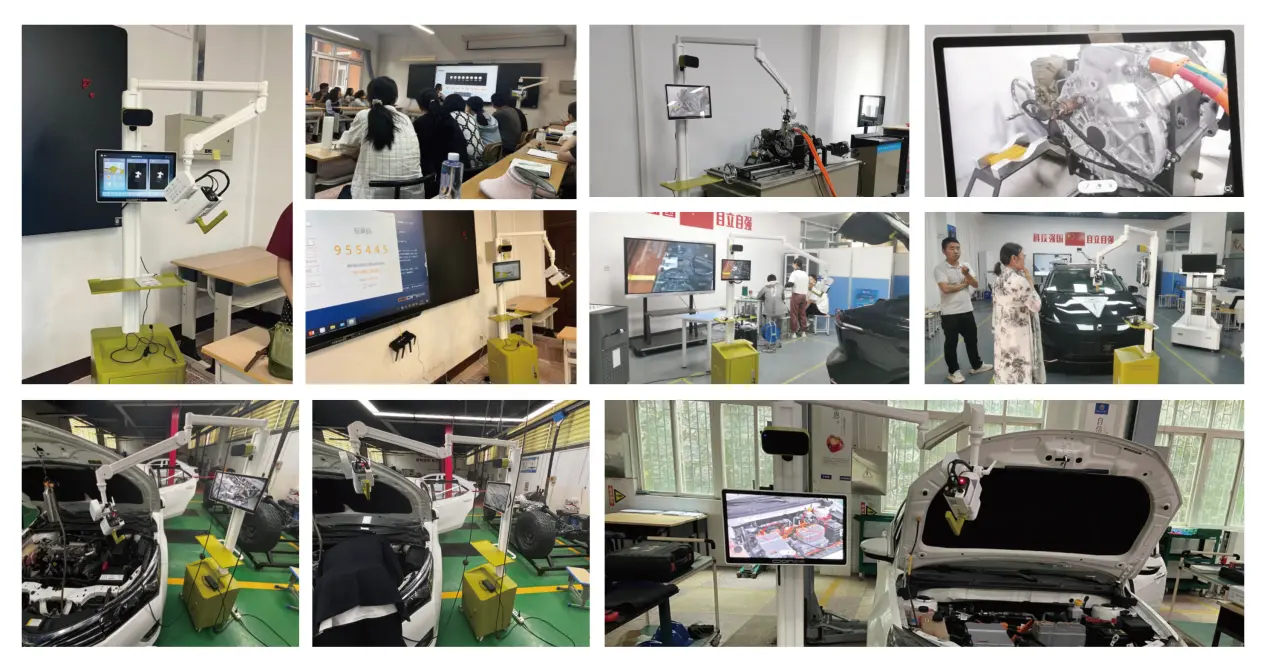
Benefits and Use Cases
Accessibility and Flexibility: LERS smashes the constraints of time and place. A student sits in rural India listening to a Harvard lecture on campus, an invalid student in Paris catching up on missed material while convalescing — all in one model of education that is inclusive and adaptive due to its anytime-anywhere accessibility setup.
Flipped and Hybrid Classrooms: The flipped classroom basically depends on recorded lectures that would be assigned as homework so that students come to class ready for discussion. Hybrid classrooms use live streaming so that remote learners get the same experience as in-person students.
Content Delivery Consistency: When standardized recording systems are used by instructors, it can be assured at an institutional level that students receive consistent information, especially across campuses or semesters. It also minimizes the gap between different instructors teaching the same course.
Faculty Development: Recording classes would help faculty to review the methodology of teaching, clarity in language, or any means of engaging students. The recordings may also be used for the training purposes of new educators or guest lecturers.
Corporate Training
Corporate training divisions utilize LERS for documenting worker onboarding, compliance education, technical accreditation, and procedure revisions. Content is captured a single time and observed multiple times, lowering the expense of training.
Medical and Scientific Education
Operations in surgery, laboratory work, and clinical sessions may be recorded to educate upcoming physicians or scholars. LERS supports multi-perspective recording along with the ability for on-screen markup, which enhances detailed comprehension.
K–12 Schooling
LERS has found a wide scope of implementation at the secondary level for managing blended learning, recording classroom performances, and facilitating remote learning.
Key Features to Consider When Choosing a LERS
- High-Resolution Video (HD or 4K): Clarity attracts students to concentrate on diagrams, demonstrations, and facial expressions.
- Clear Audio Capture: Omnidirectional microphones, audio mixers, and some soundproofing increase intelligibility to a great extent.
- Auto-Tracking Cameras: Freedom in teaching style because cameras need to follow the lecturer’s movement.
- Smooth LMS Integration: Works with Moodle, Blackboard, Canvas, Google Classroom, and more.
- Live Captioning and Transcription: Real-time AI captioning helps students with disabilities or language barriers.
- Security Protocols: Encrypted storage, user access permissions, GDPR/FERPA compliance.
- Interactive Elements: Interactive polls, Q&A, and digital whiteboard integration during live stream.
Implementation Considerations
Infrastructure Demands: Stable internet bandwidth, server capacity, and IT support are also needed. It may be required for institutions to improve their digital infrastructure as an investment in support of continuous streaming and storage.
Implementation Costs: LERS at the high end can be priced expensively. However, SaaS-based and cloud-hosted models provide scalable, affordable options. Schools may also pilot classrooms to begin with.
Privacy and Consent: Institutions need to frame a policy on ethics concerning student privacy. Forms for consent, video disclaimers, and opt-out options will ensure transparency.
Resistance to Recording: Some educators are uncomfortable with being recorded. Continuous training and highlighting the long-term benefits can help ease the transition. It will take time.
Best Practices: Begin with several flagship classrooms. Include faculty at the outset and provide training. Assign IT support explicitly for troubleshooting. Observe usage as well as feedback to fine-tune rollout.
Conclusion
Live Educational Recording Systems are not novelties anymore. They are mandatory if educators are to be empowered to teach beyond boundaries so that students can access quality education from wherever they may be located. LERS will further develop as a substantial component of the modern education infrastructure as the world moves towards an inclusive and tech-based learning paradigm.
Interactive Displays in Education
Chalk and whiteboards, which had always been considered the basic, synonymous elements of classrooms, are not so passive or receptive anymore when incorporated into modern learning environments. Interactive Displays belong to high-tech touch-sensitive flat panels that can be used by more than one user simultaneously — large, oversized computer screens for some.
In K–12, higher education, and career training schools, interactive displays have completely evolved the academic experience. This article discusses the operation of digital teaching aids and their advantages, together with challenges to their application and how they are going to participate in the new format of education.